« June 2006 | Main | August 2006 »

July 16, 2006

The Scoop

Dominic Armato
Well, I figure it's probably about time to let the cat out of the bag.

A couple of weeks back, I made mention of my Mysterious Dining Companion, who you now see (mostly) pictured on the right. She is Chicago Tribune reporter, food geek and all-around affable gal, Trine Tsouderos. I've blurred her out here partly because she's been working the food beat, but mostly because if I didn't then I'd have to stop referring to her as Mysterious Dining Companion, which is significantly cooler than plain old Dining Companion.

Trine and Mother Tribune were kind enough to take me out for a couple of tasty meals in return for my thoughts on food blogging in general and restaurant photography in specific. She's working on an article for this coming Thursday's edition, in the At Play section. I can't tell you anything about the article, not because I'm trying to be coy, but because I'm not 100% certain what to expect, myself. In any case, bread was broken, dishes were tasted, photos were snapped, foodie-type issues were discussed, and I'm anxious to see the final piece. I have many thoughts on the subjects we discussed, but I figure I'll hold off and let the professional fire the first salvo.

Should be interesting!

7/27 Update: The article was published last Thursday, and you can download a PDF here.

July 13, 2006

Ideas I Wish Were Mine

Dominic Armato
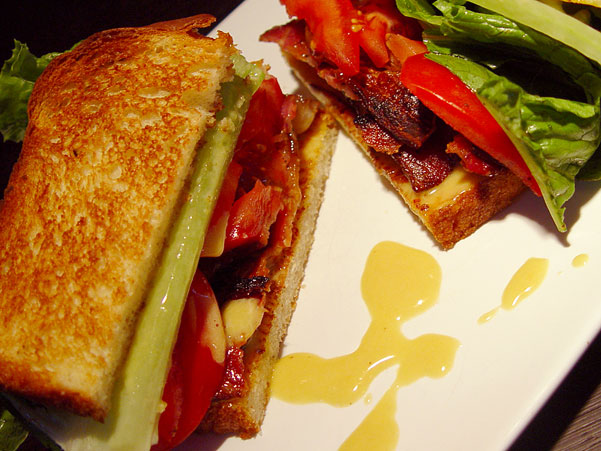
Bacon fat and mayonnaise are two foodstuffs that I'd categorize as dangerous. Marrying them is borderline catastrophic. But some boundaries are meant to be crossed.

The hot topics of the week over at LTH end up dictating my meal choices all too often. There's been quite a bit of BLT talk over the past week, I adore a good BLT and I haven't had one in quite some time. So I was already one nudge away from a BLT binge. And then, in the course of discussing how to pump up the intensity of the bacon flavor, Louisa Chu had to go and suggest this:

"Try using bacon fat to make your mayo."

These are not words that should ever be uttered in the company of somebody who has an unhealthy affinity for pig lipid. So simple, so elegant and, in retrospect, so obvious. If only I'd thought of that one for Iron Chef Bacon, I'm fairly confident I could have turned the tables on my challenger (who I'm sure will shortly be simultaneously thanking and cursing me for bringing this idea to him).

Oh, man, is it good. Where a traditional fresh mayonnaise is kind of light and fluffy, the bacon mayo is some potent, smoky and rich stuff. And I fear its potentially addictive qualities. To some degree, BLTs have always been a mayonnaise vehicle for me, and this doesn't help matters. I don't know that I've ever felt guilty about posting a recipe before, but for whoever makes this one... I'm sorry. You've been warned.


Dominic Armato
1/2 Lb. thick cut fatty bacon
1 large egg yolk
3/4 tsp. sherry vinegar
1/4 C. light, fruity olive oil
lemon juice
salt & pepper
sandwich bread
1 tomato
lettuce

BLT with Bacon Mayo
Makes doctors angry (and 2 sandwiches)

First off, a note on the bacon. Though I have always considered "lean" bacon to be my mortal enemy and advocated embracing the fat, this is one recipe where a good fatty bacon is not only a better choice, but a necessity. Don't choose a lean bacon for this dish. That's like taking the cherry off your banana split to cut calories. Just enjoy your sandwich and then go hop on an exercise bike for an hour. Or five.

In a large skillet over medium-high heat -- cast iron, if you have it -- fry the bacon until it's at a level of crispiness that makes you happy. However, if you're somebody who likes your bacon lightly cooked, try to cook off no less than 1/3 C. of bacon fat as you'll need at least that much for the mayo. Move your crispy bacon to some paper towels to drain. Pour all of the bacon fat into a large, shallow dish (one that can handle heat!) and pop it in the fridge for a few minutes so it cools as quickly as possible. It can still be warm, but you don't want it to be hot.

For the bacon mayo, it's probably worth noting that the olive oil kind of positions it somewhere between a mayo and an aioli. If you want to push it more in the aioli direction, add some minced garlic. If you want to push it more in the mayo direction, use vegetable oil in place of the olive oil. It's going to be tasty no matter what, it's just a question of what's floating your boat at the moment. To make the bacon mayo, let an egg come to room temperature (or close), crack it and separate out the yolk. In a mixing bowl, combine the egg yolk and sherry vinegar, and whisk vigorously until the yolk gets slightly frothy. At this point, start adding the olive oil a drop at a time, while whisking continuously. It may seem a little silly, but that's the only way to get a good emulsion. Your arm will hate you, but you're about to consume a BLT with bacon mayo... you could probably use the exercise. If, as you're whisking, the emulsion starts to separate, stop adding oil and beat it like crazy until it comes together, at which point you can continue adding oil. Once you've added a tablespoon or two, you can add the oil a little more quickly. When all of the olive oil has been added, switch to the reserved bacon fat. Continue slowly adding and whipping until it reaches a nice mayo consistency. If you run out of bacon fat, you can finish it with some more olive oil, but hopefully that won't be necessary. Mix in a little salt, pepper and lemon juice to taste, and the mayo is done.

As for the assembly... you don't need a receipe to assemble a BLT. Toast a little bread, slice a little tomato, leaf a little lettuce, throw on a bunch of bacon and slather generously with the bacon mayo. I'm sorry. I truly am. But it's really good.

July 11, 2006

Old Favorites

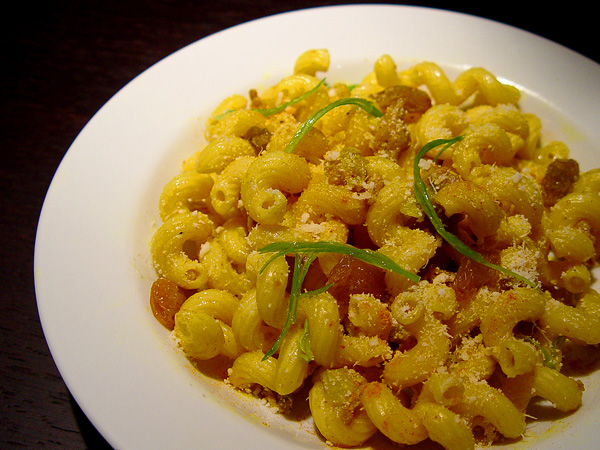
Though you wouldn't know it from the Alinea post, blogging time has actually been a little scarce as of late. So I figured I'd resurrect a few of the ancient posts that didn't make the move from the old blog. On top of which, this pasta is one of my favorites, so I had to get it in somewhere. As always, the Ten Commandments of Dried Pasta apply.


Dominic Armato
1/2 C. golden raisins
4-5 green onions
1/2 Lb. sweet Italian sausage
6 Tbsp. unsalted butter
2 Tbsp. extra virgin olive oil
1 Tbsp. Turmeric
1/2 C. heavy cream
salt & pepper
1 Lb. cavatappi
coarse sea salt
grated parmigiano reggiano

Cavatappi with Sausage,
Raisins and Turmeric Cream

Serves 3 as an entree, 5-6 as a primo

First, get your water on the stove, because nothing stinks more than having your sauce just about ready and realizing that your water's going to be another hour. And while that's going, you can get the other ingredients ready. Soak the raisins in hot tap water for about 20 minutes so they soften, then drain them and pat them dry. As for the green onions, slice the white and light green portions very thinly on a diagonal, discarding the dark green portions. It's best to slice the green onions right before you use them, but if they're going to sit for a bit, seal them in something airtight... tupperware or a bowl covered in saran wrap... so all of the tasty stuff doesn't evaporate. Also, remove the sausage from its casings and crumble it up a little bit.

In a large skillet (ideally large enough to hold the entire pound of pasta), combine the butter and olive oil over medium-low heat and swirl around until the butter is completely melted. Add the sliced green onions and cook 'em for 5-6 minutes, stirring occasionally, until they soften. Be sure the heat is low enough that the butter doesn't brown. If it starts to, pull the pan off the heat, give it a moment, then turn the burner down a bit before putting the skillet back. Once the onions are softened, increase the heat to medium-high and immediately add the sausage, stirring and breaking it apart as it cooks. Once the sausage has lost its raw color, add the turmeric and raisins and cook, stirring, for about two minutes so the turmeric mixes in and gets nice and fragrant. Reduce the heat to medium and add the cream, cooking for another 2-3 minutes and stirring regularly until the sauce comes together and looks appropriately saucy. Salt and pepper to taste... it's a cream sauce, so you'll need a bunch of salt. Don't be shy.

Meanwhile, cook your cavatappi. Right before you drain the pasta, drop 2-3 Tbsp. of the starchy pasta water in the sauce, and stir it in. Drain the pasta, combine it with the sauce, and cook them together for over low heat for a minute, so the pasta absorbs a bit of the sauce and the starch has a chance to thicken it. Serve the pasta with parmigiano reggiano and garnish with anything else you deem appropriate. A little sprinkle of turmeric looks slick, but gets overpowering pretty quickly. Be gentle.

July 10, 2006

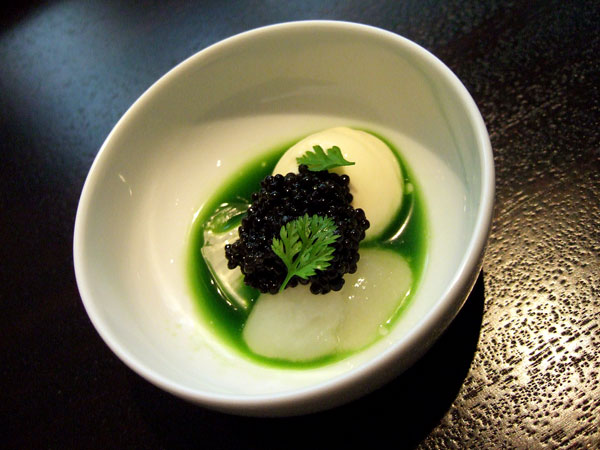
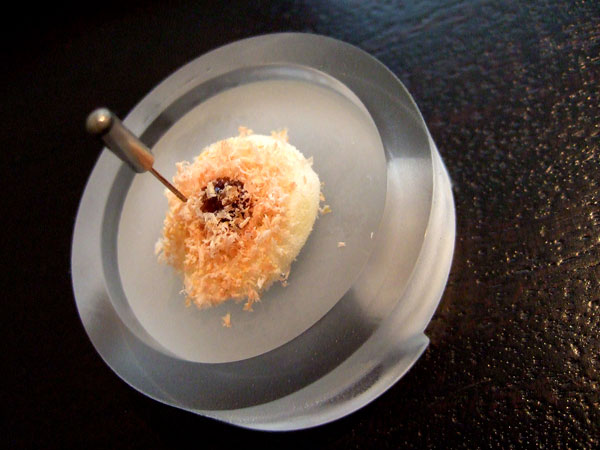
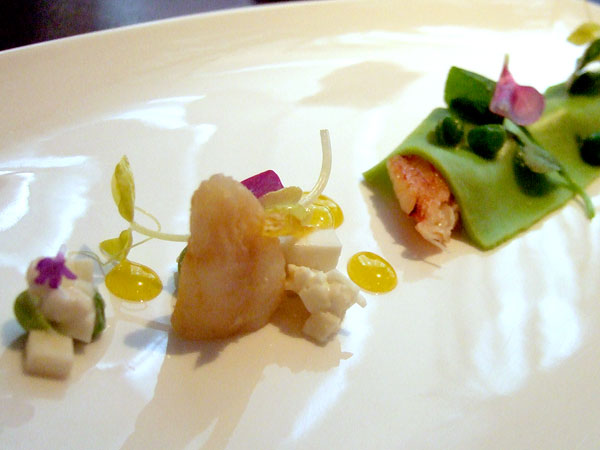
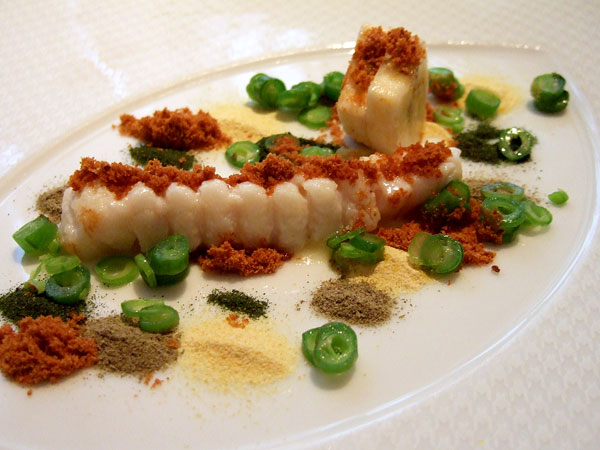
Alinea

Dominic Armato

It isn't a sprint... it's a marathon.

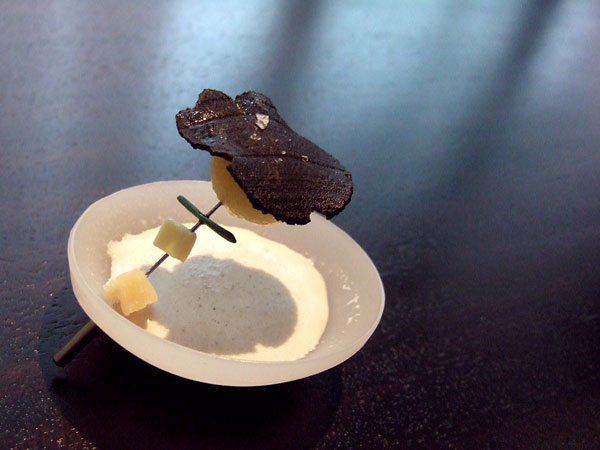
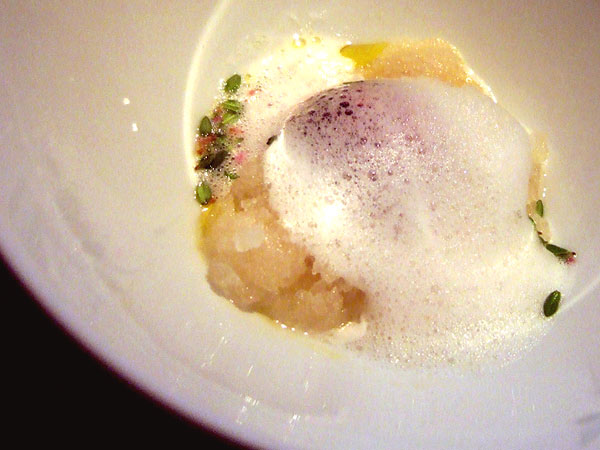
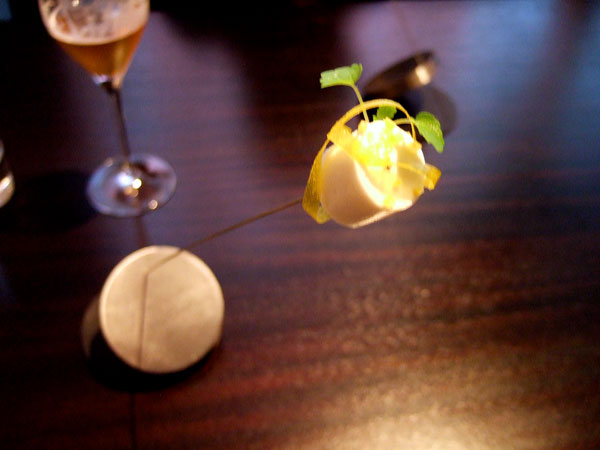
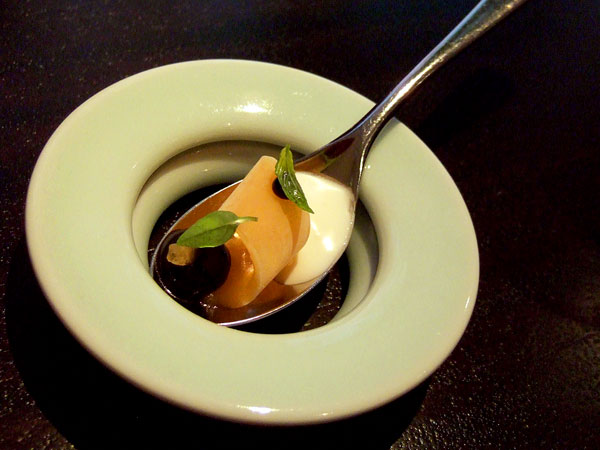
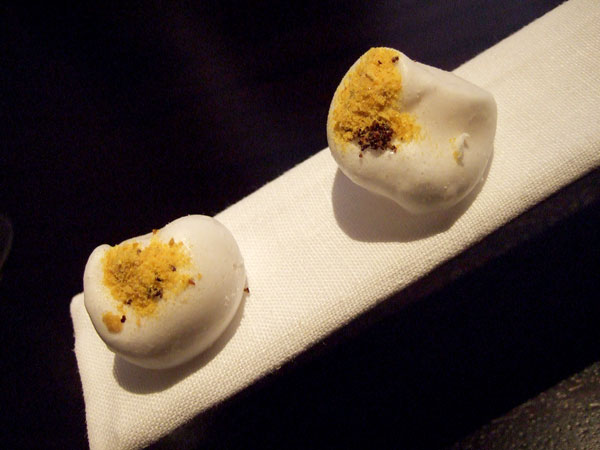
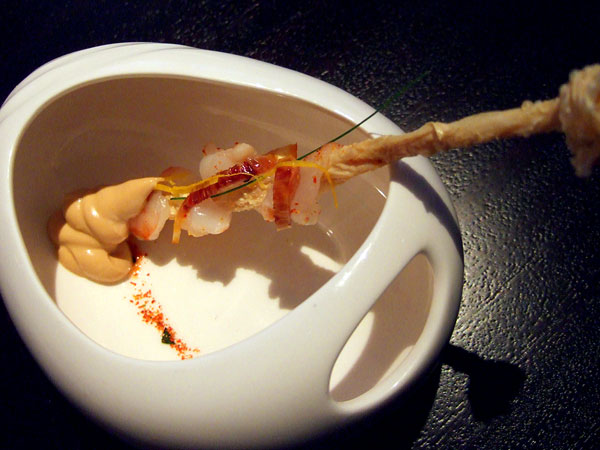
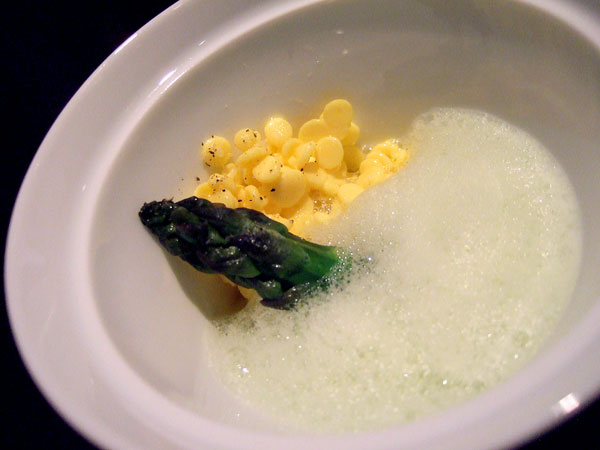
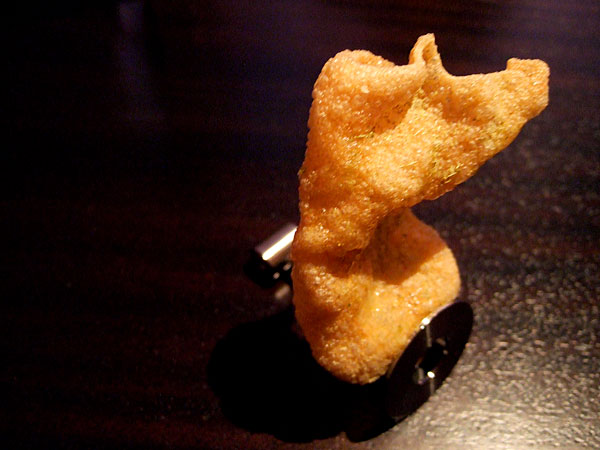
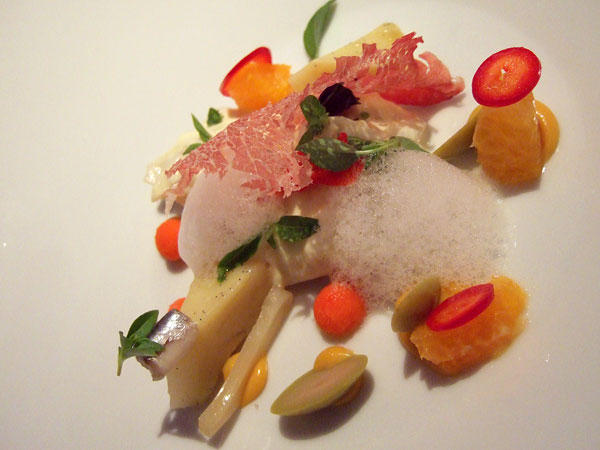
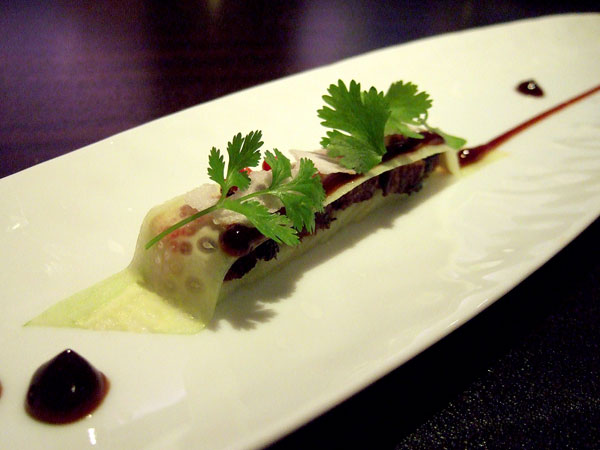
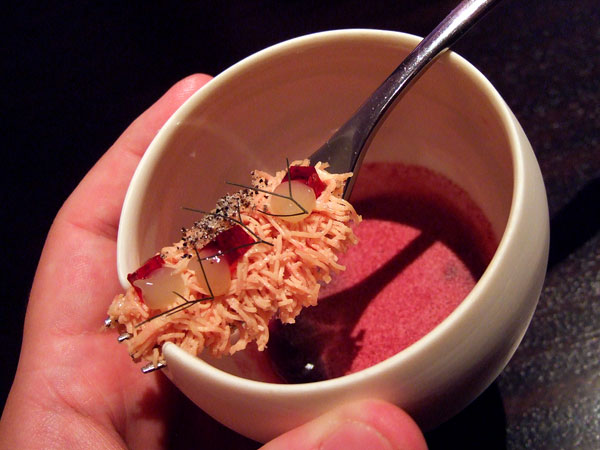
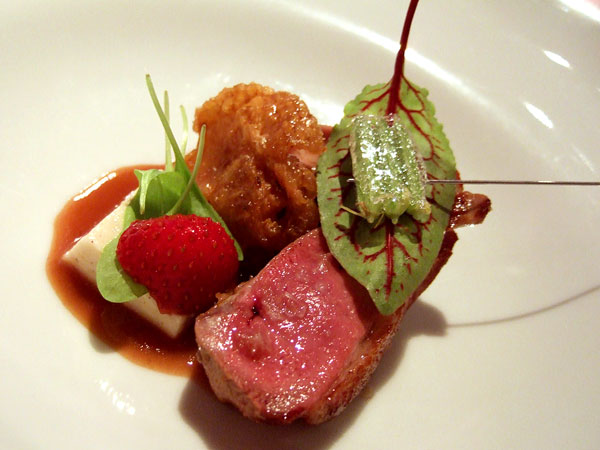
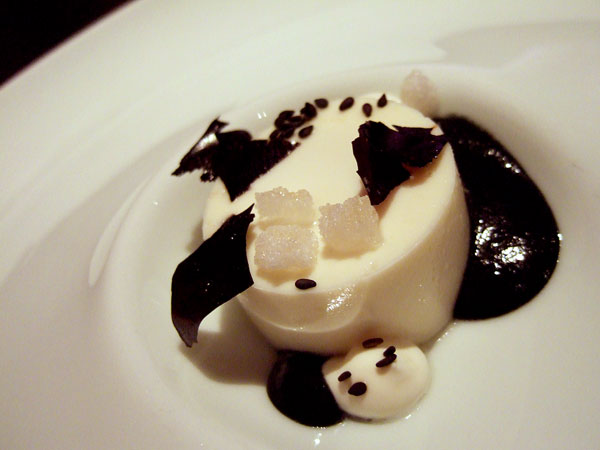
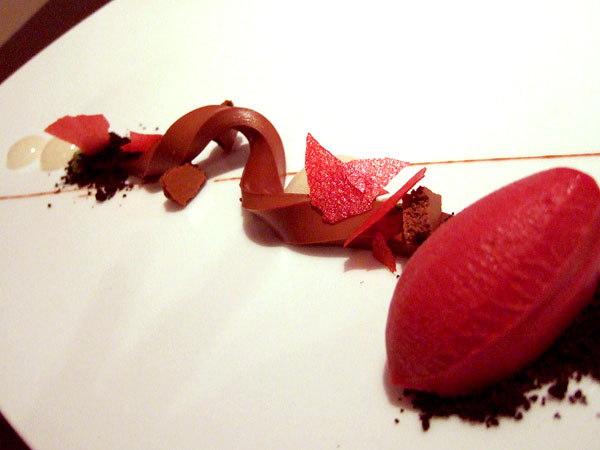
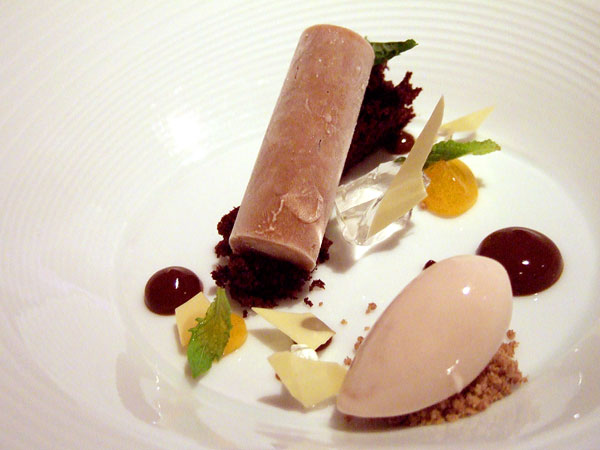
A light marathon, if there is such a thing, but a marathon nonetheless. It took a year and two rebooked reservations, but last night we finally got to Alinea, Grant Achatz' post-Trio venture. Achatz, along with Homaro Cantu, bears the torch of molecular gastronomy in Chicago and, arguably, the United States. It's a controversial little culinary niche these days, molecular gastronomy. Consensus seems to be that the godfather of the movement, Ferran Adriá, is a genius. The question is whether the chefs following in his wake are creative technicians who are changing the face of modern cuisine, or style over substance mimics whose days are numbered. In short, I fully anticipated that dinner at Alinea would be interesting. I hoped it would be good. But the only thing I was certain of was that it would be long.

Dominic Armato
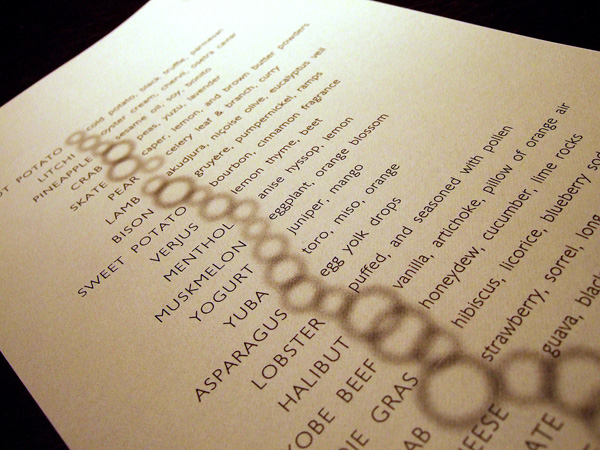
The menu at Alinea consists solely of two options, the full 24 course tour, and a smaller subset thereof, the 12 course tasting. As such, it's a good thing that the room is comfortable. It's the kind of decor that pushes my buttons. It's a small place, modern but comfortable, dimly lit with table spots to highlight the presentations. Upon being seated and receiving the menu, Achatz' playfulness is immediately evident. The menu lists solely the ingredients contained within each dish, without any hint as to the preparations. It also employs a secret code of sorts. Between the primary ingredient and supporting ingredients is a fuzzy circle. Though indistinct in appearance, the information it conveys, though something of a tease, is anything but. The size of the circle is indicative of the relative size of the dish, the intensity of the grey directly relates to the intensity of the flavor, and its left to right position places it on a continuum from savory to sweet. Once a decision is made, the dishes start flying at a fair clip. Stretch out 24 courses too far, and you'll be there all night. Even at a brisk pace, our dinner clocked in at three hours and 45 minutes.

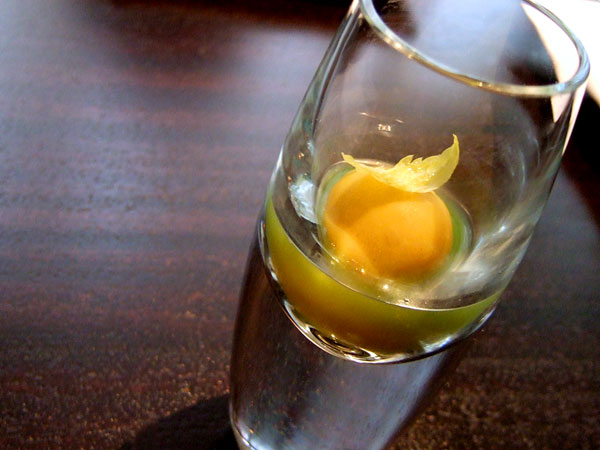
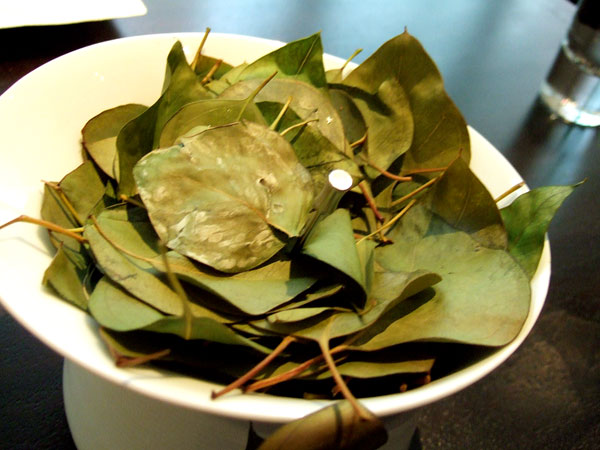
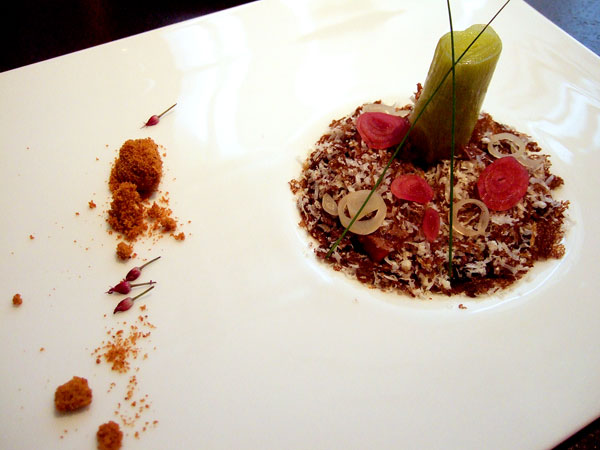
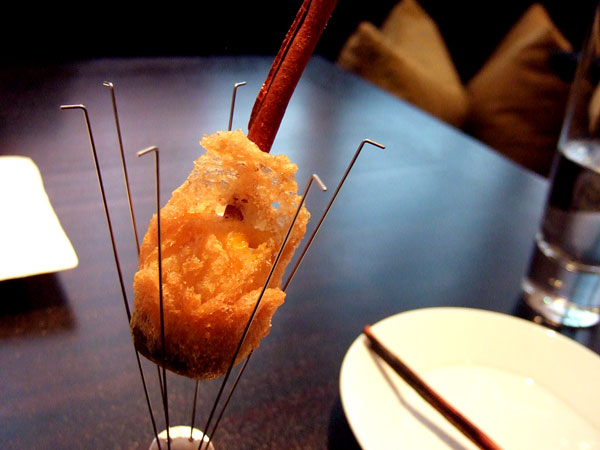
Dish descriptions and photos, unsurprisingly, are proportionately lengthy. But the only way to get a good sense of the place is to see them all, so they're all here... after the jump:

Continue reading "Alinea" »

July 08, 2006

Dietary "Restrictions"

Dominic Armato
Well, we just got back from the full-on 24 course extravaganza at Alinea, and the write-up is coming... lotsa photos to edit... but in the interim, if you'll pardon the rant, I'd like to raise a topic that I've always found maddening, particularly tonight.

Alinea serves a set tasting menu, the only option being whether to eat the full 24 course tour or a smaller 12 course sampling. So before starting the meal, the staff routinely asks if there are any allergies or dietary restrictions at the table. We ate in the downstairs room, which holds five tables. Over the course of our meal, there were a grand total of 16 diners who passed through, not counting us. From these 16 diners, we overheard the following requests:

• No foie gras.
• I don't want cilantro.
• I don't like oysters.
• I don't like strong garlic.
• A little is okay, but go easy on the gelatin.
• No seafood.
• No onions.

Now, whether I think these preferences are silly or not is irrelevant. People don't like things (or, more frequently, think they don't like things), and that's their call. But there are three elements that, in concert, I found absolutely maddening. First, in all of these cases, it was made very clear by the diners that allergies were not involved. Second, while the foie gras may or may not have been an ethical choice, the rest clearly were not. Third, it's a freaking 24 course menu. If a whopping three of them are objectionable in some way, that leaves you with twenty-one to enjoy. So, in short, nearly half of the diners in our room tonight were citing dietary restrictions, based not on health issues or ethical/religious reasons, but rather on a simple unwillingness to sample, or even consider, the full scope of the highly detailed and meticulously planned dining experience prepared by the chef.

Perhaps this is an overly sensitive response on my part, but you've just made the choice to come to one of the hottest new restaurants in the nation, with a young chef who is known for creating funky, unusual dishes, and where it is indirectly made clear at the time of your reservation that you do not get to choose what you eat. So if you are such a picky eater that you refuse to eat onions, arguably the singlemost ubiquitous and indispensable ingredient across nearly all cuisines worldwide, hearing your "no onions" edict inspires in me a nearly irresistible urge to stand up, turn around, walk over to your table and ask...

...Why are you here?!?

Clearly I would never do so, but is this instinct out of line? You don't watch a Jerry Bruckheimer film and edit out the explosions. You don't go to a pro football game and demand that they cut down on the hard tackles. You don't go to a Maya Angelou poetry reading and ask her if maybe she'd mind not bringing up the subject of race tonight. So if your food preferences are so important that when you go to a fine dining establishment, you feel it necessary to make the kitchen bend over backwards on the off chance that perhaps 5% of the food you'll be given might not be exactly to your liking, shouldn't you just consider eating somewhere else?

July 05, 2006

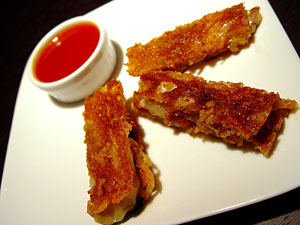
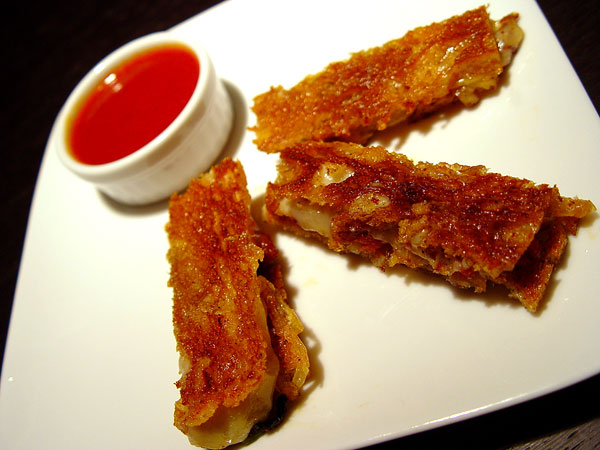
Grilled Cheese Sticks v2.0

A little late, but tasty nonetheless!

A couple of weeks back, I decided to play around with an old Iron Chef idea that was never realized. It was a makeshift version utilizing the items I had lying around the house at the time, so in the subsequent error analysis, I decided to go shopping and try it again, this time the way it was intended. There were four items that I thought needed improvement, and I got 'em all resolved tonight. The resulting recipe pushes an already greasy sandwich into a realm that makes even me a little squeamish... but deliciousness conquers all, as usual. From a technical standpoint, it's a little more involved than the previous recipe, but even if you just follow the old recipe, omit the pecorino, add the sausage and Spanish cheese, and you'll be a happy camper.

Oh, and for anybody who's wondering what happened to the Parmesan crust, I decided to axe it. My sheep's cheese was nice and nutty, and the thinner slices of bread got plenty crispy on their own. If you really dig the crust, go nuts... but I think this revised edition has enough going on that it doesn't need it.


Dominic Armato
1 C. San Marzano tomato puree
2 Tbsp. extra virgin olive oil
2 Tbsp. chopped fresh basil
1/4 tsp. red pepper flakes
1 tsp. coarse sea salt
2 Tbsp. extra virgin olive oil
3 oz. Merguez sausage
1 garlic clove
1/2 small yellow onion
1/2 tsp. paprika
1 large loaf dense rustic bread
2 Tbsp. unsalted butter
2 slices muenster cheese
4 oz. Spanish sheep's milk cheese
Spanish Grilled Cheese Sticks
with Merguez, Caramelized
Onions and Tomato Dip

Makes 2 Sandwiches

First, a quick note on the cheese. When you choose a sheep's milk cheese, you want to try to get one with a decent amount of moisture. If it's too hard and dry, it may be delicious, but it's less likely to melt well. In any case, shredding the cheese will probably aid in the melting process.

In a small saucepan, combine the tomato sauce, 2 Tbsp. olive oil, basil, red pepper and salt. Simmer over low heat while you make the sandwiches. You want the tomato flavor to develop and get really intense. It'll be fairly salty. That's by design. However, if you're using a fine grain salt, cut down on the amount or it'll end up even more salty than intended.

In a large sauté pan with a cover, heat 2 Tbsp. olive oil over medium heat. Peel and finely mince the garlic, and once the oil is hot, add the garlic and sauté for 10-15 seconds. Remove the sausage from its casings and add to the pan, breaking up as it cooks. Sauté the sausage until it is cooked and slightly crispy. Then, using a slotted spoon, remove the cooked sausage and set aside, leaving as much of the oil and sausage fat in the pan as possible. Slice the onion very, very thin... perhaps not quite paper thin, but very thin... and toss it in the hot pan with the greasy stuff left behind. Sauté the onion for a minute or two, then reduce the heat to low and cook the onions until they take on a deep golden color, about 15 minutes or so. If they fully caramelize and turn brown they'll still be quite tasty, but I think a bit of non-caramelized onion flavor suits this dish rather well. Remove the onions from the pan and set aside, once again leaving as much oil and sausage fat in the pan as possible.

Meanwhile, slice up the loaf of bread. You won't use very much of it, but it needs to be big so you can get a good-sized chunk of the insides to make sandwich slices. There are plenty of uses for the rest of the loaf. You'll think of something. Trim the bread down so that you end up with four slices about the size of sandwich bread, but half the thickness. Once you remove the onions from the pan, raise the heat to medium-low and add 1 Tbsp. unsalted butter, swirling it around the pan. Add the four slices of bread and cook on one side until crispy and toasted, then remove them to assemble the sandwiches. While assembling the sandwiches, take the pan off the heat so that the butter doesn't burn.

Assemble the sandwiches, with the toasted side of the bread facing in. Fill each sandwich with a slice of muenster, the shredded sheep's milk cheese, half of the Merguez and half of the onions. Return the pan to medium-low heat, and add another tablespoon of butter. When the butter is melted, swirl it around the pan and add the two sandwiches. Cover the pan (to help melt the cheese) and cook until the bottom of the sandwich is nice and crispy, about 2-3 minutes. Give the butter another swirl and flip the sandwiches, again covering the pan and cooking until the other sides of the sandwiches are crispy and the cheese is fully melted. Remove the sandwiches from the pan and slice each into three sticks.

Before serving, strain the tomato mixture (which has been happily bubbling away this whole time) through a chinois or other fine-meshed strainer, pressing against the sides to push through as much of the tomato liquid as possible, and discarding the solids left behind. Give the tomato mixture a quick whisk to thoroughly combine the tomato and oil.

Plate the sandwich sticks alongside a small dish of the tomato sauce, dip and eat. And tell your arteries that I just write the recipes.

July 03, 2006

Oops.

I think I just made a critical error.

I just finished watching Bourdain's special on Ferran Adriá and El Bulli. This is a really, really big problem. My soul is now officially up for sale. If somebody told me they could get me in tomorrow night, I'd find some way to get there.

I have always been suspicious of the molecular gastronomy movement. But what this special did was convince me that Adriá is about the food. The process, as nutty as it seems, is still simply the means. This goes way beyond creative and inventive. What Adriá is doing now seems much, much bigger to me, and I'm suddenly consumed by a need to see it for myself.

Soooo... anybody got an in?